
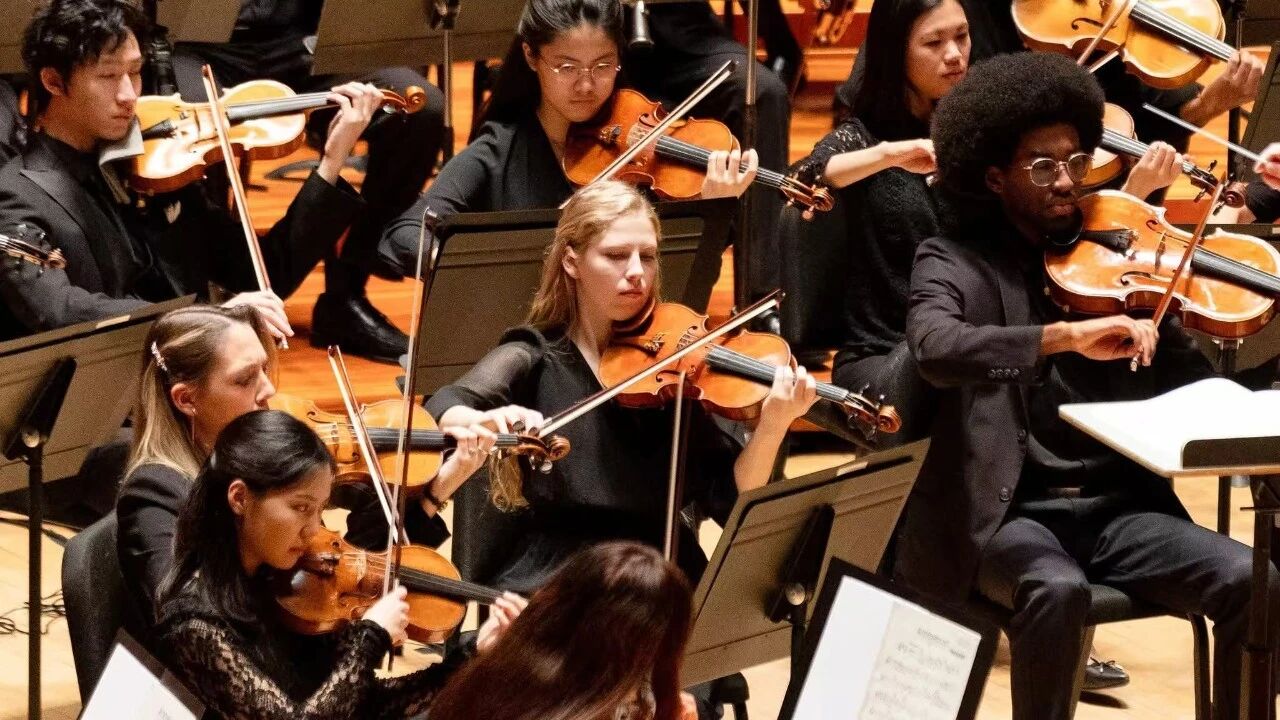
著名芬兰指挥家奥斯莫·万斯卡 (Osmo Vänskä) 率领柯蒂斯交响乐团演奏了充满活力的节目,其中包括巴托克、马佐利和多恩的作品,以及大卫·瑟金·路德维希 (David Serkin Ludwig) 的新木管协奏曲 (Composition '01) 的全球首演,其中包括格莱美奖五重奏伊曼尼管乐 (Imani Winds)。
柯蒂斯交响乐团将于 1 月 25 日星期日下午 3:00 举办 2025-26 系列音乐会的第二场音乐会。 在金梅尔中心的玛丽安·安德森音乐厅,由芬兰指挥家奥斯莫·万斯卡 (Osmo Vänskä) 指挥,演奏贝拉·巴托克 (Béla Bartók) 的精湛管弦乐协奏曲。 这个充满活力的节目还包括大卫·瑟金·路德维希(David Serkin Ludwig)为伊曼尼管乐和管弦乐队创作的新协奏曲(Composition ’01)的全球首演,以及由丽塔·豪瑟(Rita E. Hauser)指挥研究员赵伊然领衔的米西·马佐利(Missy Mazzoli)的作品,以及作曲家兼指挥亨利·多恩(Henry Dorn)的冥想作品。
节目以赵女士指挥的 Missy Mazzoli 的 Sinfonia(轨道球体)拉开序幕。 这部时长 12 分钟的作品是一首旋转的天体作品,其灵感来自行星运动和中世纪弦乐器 hurdy-gurdy 的翻滚嗡嗡声。 马佐利将其设计成太阳系的形状,具有一系列洛可可式的环,这些环在更大的轨道内相互缠绕。 这首作品于 2013 年受洛杉矶爱乐乐团委托创作,它搅动着乐团,将乐团变成了一支临时的哈迪古迪乐队,不顾一切地抛向太空。
接下来是亨利·多恩强有力的《转变》——一首关于失落、转变和恢复力的深刻个人语气的诗。多恩写下他对母亲最后几天照顾的反思,清晰而强烈地阐述了癌症和护理的现实。 他围绕密集、驱动的纹理构建了这首作品,包括反映疾病进展的反复出现的赋格思想,以及受医院声音启发的机械手势和呼吸般的上升旋律。这部作品以开场材料的最终回归结束,并以一段突出的圆号声明告终——有意提及他演奏圆号的母亲——作为该作品的结束致敬。
音乐会继续进行大卫·瑟金·路德维希 (David Serkin Ludwig) 的《被遗忘的生物之书》(A Book of Forgotten Creatures) 的全球首演,由格莱美奖获奖五重奏和柯蒂斯教员伊玛尼·温兹 (Imani Winds) 表演。 该作品由《星际迷航》演员约翰·德·兰西担任旁白,分五个动作展开:龙王鲸、拟犀牛、剑齿虎、泰拉托尼斯和始祖马,每个动作的灵感都来自史前动物。通过这种方法,柯蒂斯校友、前任教员、作曲系主任路德维希利用音乐和文学故事讲述。
“讲故事是贯穿我所写一切的主线,”路德维希说。 “我感兴趣的是通过音乐讲述故事,激发听众的思考。在《被遗忘的生物之书》中,我希望通过音乐的声音和人物来捕捉这些史前动物的奇幻品质,但其中有一个潜台词。表面上,它就像动物嘉年华,但在它的背后,是关于改变的必要性和认识到总是有选择的。”
贝拉·巴托克的管弦乐协奏曲为演出画上了圆满的句号。这部由波士顿交响乐团指挥谢尔盖·库塞维茨基 (Serge Koussevitzky) 于 1943 年为纪念其已故妻子而委托制作的五乐章杰作,融合了民间风格的旋律与现代主义和声,将乐团的每个部分都视为一位精湛的独奏家。 巴托克在个人经历巨大困难的时期创作了这部作品,他在纽约一家疗养院居住期间仅用了两个月的时间就完成了这部作品,他在逃离匈牙利以逃避纳粹政权后在那里接受白血病治疗。
巴托克将这部协奏曲的轨迹描述为一个渐进的过程——从开场乐章的严肃和第三乐章的“悲伤的死亡之歌”,到第二乐章的轻快,再到终乐章的肯定生命的能量。他最后完成的作品之一《管弦乐队协奏曲》于 1944 年首演。巴托克于次年去世,距首演不到 12 个月。
在柯蒂斯,世界上伟大的年轻音乐家成长为杰出的艺术家、创造者和创新者。柯蒂斯拥有免学费的基础,拥有独特的教学和学习环境。这是一所小型学校,学生通过与最著名、最受欢迎的教师进行深入、个性化的学习来实现自己的艺术潜力。秉承边做边学的理念,柯蒂斯学生每年通过 100 多场表演与观众分享他们的音乐,包括独奏和室内演奏会、管弦乐音乐会和歌剧(全部免费或价格实惠),为观众提供了参与这些年轻音乐家职业生涯关键时刻的独特机会。
柯蒂斯学生体验到与古典音乐领域最伟大的艺术家和组织的密切联系,以及整合新技术和鼓励创业的创新举措——所有这些都在文化丰富的费城中心的历史悠久的校园内进行。在这个多元化、协作的社区中,柯蒂斯的杰出艺术家相互挑战、支持和激励,延续了音乐家们无与伦比的遗产,他们已经并将引领古典音乐走向繁荣、公平和多维的未来。
Renowned Finnish conductor Osmo Vänskä leads the Curtis Symphony Orchestra in a dynamic program featuring works by Bartók, Mazzoli, and Dorn—as well as the world premiere of a new concerto for woodwinds by David Serkin Ludwig (Composition ’01), featuring Grammy Award-winning quintet Imani Winds.
The Curtis Symphony Orchestra presents the second concert of its 2025–26 series on Sunday, January 25, at 3:00 p.m. in Marian Anderson Hall, Kimmel Center, featuring Béla Bartók’s virtuosic Concerto for Orchestra, performed under the baton of Finnish conductor Osmo Vänskä. This dynamic program also features the world premiere of a new concerto for Imani Winds and orchestra by David Serkin Ludwig (Composition ’01)—as well as a piece by Missy Mazzoli, led by Rita E. Hauser Conducting Fellow Yiran Zhao, and a meditative work by composer-conductor Henry Dorn.
The program opens with Missy Mazzoli’s Sinfonia (for Orbiting Spheres), conducted by Ms. Zhao. A swirling, celestial work, this 12-minute piece was inspired by planetary motion and the roiling drone of the medieval stringed instrument, the hurdy-gurdy. Mazzoli composed it in the shape of a solar system, featuring a collection of rococo loops that twist around each other within a larger orbit. Commissioned in 2013 by the Los Angeles Philharmonic, this piece churns and roils, transforming the ensemble into a makeshift hurdy-gurdy that is flung recklessly into space.
Henry Dorn’s powerful Transitions follows—a deeply personal tone poem about loss, transformation, and resilience. Written as a reflection on caring for his mother during her final days, Dorn addresses the realities of cancer and caregiving with clarity and intensity. He structures the piece around dense, driving textures, including a recurring fugal idea that reflects the illness’s progression, alongside mechanical gestures inspired by hospital sounds and a breath-like rising melody. The work concludes with a final return of the opening material, culminating in a prominent horn statement—an intentional reference to his mother, who played the horn—serving as the piece’s closing tribute.
The concert continues with the world premiere of David Serkin Ludwig’s A Book of Forgotten Creatures, performed by Grammy Award-winning quintet and Curtis faculty Imani Winds. Narrated by Star Trek actor John de Lancie, the work unfolds in five movements—Basilosaurus, Paraceratherium, Smilodon, Teratornis, and Eohippus—each inspired by a prehistoric animal. Through this approach, Ludwig, a Curtis alumnus and former faculty member who served as head of the composition department, draws on both musical and literary storytelling.
“Storytelling is the thread that runs through everything I write,” says Ludwig. “I’m interested in telling stories through music that provoke thought in the listener. In A Book of Forgotten Creatures, I’m hoping to capture the fantastical qualities of these prehistoric animals in the sounds and characters of the music, but there’s a subtext. On the surface, it’s like Carnival of the Animals, but underneath it’‘s about the necessity of change and the recognition that there is always a choice.”
Béla Bartók’s Concerto for Orchestra concludes the program. Commissioned in 1943 by Serge Koussevitzky, conductor of the Boston Symphony, in memory of his late wife, the five-movement masterwork blends folk-inspired melodies with modernist harmonies, treating each section of the ensemble as a virtuosic soloist. Bartók composed the work during a period of profound personal hardship, writing it in just two months while residing at a New York sanatorium, where he was being treated for leukemia after fleeing Hungary to escape the Nazi regime.
Bartók described the concerto’s trajectory as a gradual progression—from the severity of the opening movement and the “lugubrious death-song” of the third, through the levity of the second, toward the life-affirming energy of the finale. One of his final completed works, the Concerto for Orchestra was premiered in 1944. Bartók died the following year, less than twelve months after its debut.
At Curtis, the world’s great young musicians develop into exceptional artists, creators, and innovators. With a tuition-free foundation, Curtis is a unique environment for teaching and learning. A small school by design, students realize their artistic potential through intensive, individualized study with the most renowned, sought-after faculty. Animated by a learn-by-doing philosophy, Curtis students share their music with audiences through more than 100 performances each year, including solo and chamber recitals, orchestral concerts, and opera—all free or at an affordable cost—offering audiences unique opportunities to participate in pivotal moments in these young musicians’ careers.
Curtis students experience a close connection to the greatest artists and organizations in classical music, and innovative initiatives that integrate new technologies and encourage entrepreneurship—all within an historic campus in the heart of culturally rich Philadelphia. In this diverse, collaborative community, Curtis’ extraordinary artists challenge, support, and inspire one another—continuing an unparalleled legacy of musicians who have led, and will lead, classical music into a thriving, equitable, and multidimensional future. Learn more at curtis.edu.